
Sports
Carson Wentz will start for Vikings against Bills
By Megan Tran
Advertisement · Why this ad?
Jessica Rourke is a proud graduate of Minot State University and has spent 7 years covering educational news in North Dakota. Her work often highlights innovative teaching practices and community support for local schools.
More from Jessica →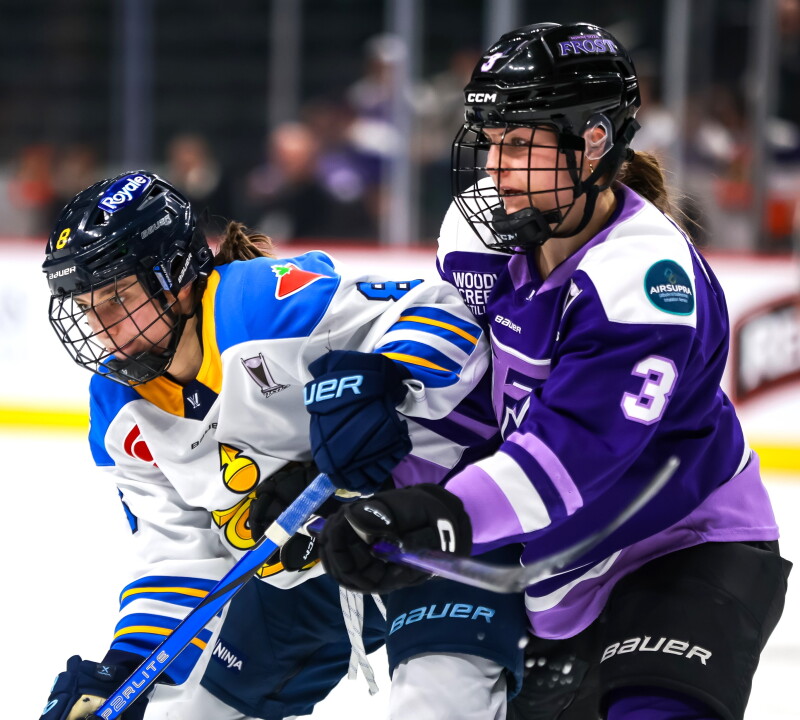
On a crisp autumn day in Grand Forks, a young girl named Emily watched her mother lace up her skates, her eyes shining with pride and hope. Emily’s mother, a dedicated local hockey coach, knew that safety on the ice wasn’t just about skill — it was about protecting the lives of women who chase their dreams through grit, grace, and faith. This personal moment echoes a broader shift in women’s hockey, as the Professional Women’s Hockey League (PWHL) takes a significant step to prioritize player safety with new mandatory neck protection rules starting this season.
The PWHL announced a pivotal rule change Thursday, requiring all players to wear cut-resistant neck protection during games and pre-game warm-ups. This decision comes in the wake of a tragic incident involving Adam Johnson, a Hibbing native and Minnesota Duluth graduate, whose life was cut short in October 2023 after his neck was slashed by an opponent’s skate during a game in England. Johnson’s death sent shockwaves through the hockey community and prompted leagues worldwide to reevaluate safety protocols.
Johnson, just 29 years old, became a symbol of the urgent need for enhanced protective gear. While the NHL and NCAA have yet to fully adopt mandatory neck protection, they have begun requiring it for new league entrants. Minnesota Wild rookie Rieger Lorenz is among the few players in the NHL to wear neck protection this season, setting a precedent for the sport’s evolution. The PWHL’s new Rule 9.10 explicitly mandates “cut-resistant protection in the neck area” for all league games, signaling a commitment to safeguarding women athletes at the professional level.
The announcement has resonated deeply within the Grand Forks community, where hockey is more than a sport — it’s a shared passion rooted in faith, family, and community values. Local players and fans alike see this change as a reflection of the league’s dedication to the well-being of women who represent their towns and families on the ice. “It’s about protecting our daughters and sisters,” says Sarah Jensen, a longtime coach and mother of three hockey players. “We want them to pursue their dreams without fear, knowing their safety is a priority.”
Many community members have expressed gratitude for the league’s proactive stance. Pastor Michael Anderson of Grand Forks’ First Baptist Church noted, “This step aligns with our faith’s call to love and protect one another. It’s encouraging to see professional sports taking real measures to honor the lives of these women.” The league’s focus on safety underscores a broader societal value: that families and communities thrive when their members are protected and valued.
Beyond Grand Forks, this decision echoes across the Midwest and beyond, where hockey remains a vital part of local identity. Small towns and larger cities alike have seen generations grow up with skates on their feet, and the safety of players—especially young women stepping onto the ice—has become a community concern. The push for better protective gear is not just about individual safety but about fostering an environment where women’s sports can flourish without undue risk.
Hockey in Grand Forks has deep roots, with the city often called the “Hub of North Dakota hockey.” The University of North Dakota’s men’s and women’s programs have produced countless professional players and inspired local youth. For years, local leagues and high school teams have been a cornerstone of community life, bringing families together on cold winter nights. The tragic death of Adam Johnson, a native of nearby Hibbing, Minnesota, resonated strongly here, reminding everyone of the fragility of life and the importance of safety innovations.
Johnson’s story struck a chord locally, especially as he was a graduate of Minnesota Duluth, a school with a passionate hockey following. His death prompted many local players and coaches to reflect on safety measures they could adopt at every level, from youth leagues to adult amateur teams. The PWHL’s move to enforce neck protection is seen as a crucial step forward, aligning with the community’s desire to protect its young athletes and honor Johnson’s memory.
Jayna Hefford, the league’s executive vice president of hockey operations, has been a leading advocate for player safety. A former Olympic gold medalist with Team Canada, Hefford’s experience on the international stage informs her commitment to safeguarding athletes. Her leadership has been instrumental in pushing for rule changes that prioritize health without compromising the integrity of the game.
Local stakeholders, including coaches, players, and parents, have also played vital roles. Sarah Jensen, the community coach, has been vocal about the importance of safety gear, emphasizing that “we owe it to our girls to give them every advantage and protection.” Her perspective echoes the sentiments of many in Grand Forks who see hockey as a vehicle for empowerment and resilience.
Looking ahead, the PWHL plans to continue testing new rules during preseason, including a novel overtime protocol that offers a penalty shot option during 3-on-3 sudden-death periods. These innovations aim to make the game more exciting while maintaining player safety and fairness. The league’s leadership, including executive vice president Jayna Hefford, emphasizes that these updates are rooted in a desire to foster a safer, more competitive environment for women athletes.
For families in Grand Forks and beyond, these changes reinforce the importance of strong, supportive communities built on shared values of faith, family, and perseverance. As Emily’s mother watches her daughter take the ice this season, she can do so with renewed confidence, knowing that the league is committed to protecting every player’s life and dreams. It’s a reminder that the true spirit of hockey — like the enduring American dream — is about resilience, commitment, and caring for one another.
As the season begins this December with games in San Jose and Las Vegas, the league’s new safety measures will be put to the test. But more importantly, they serve as a beacon of hope that sports can evolve to honor the dignity and safety of every athlete. In communities like ours, where faith and family are the foundation, these steps affirm that the protection of our loved ones is always worth fighting for.
Beyond rule changes, the league is also planning outreach programs aimed at educating players, coaches, and parents about safety equipment and injury prevention. Workshops and seminars will be held in various cities, including Grand Forks, to reinforce best practices and foster a culture of safety. Local organizations, such as the North Dakota Hockey Association, are partnering with the league to ensure that safety standards are upheld at every level of play.
Moreover, efforts are underway to support injured players and their families, providing resources and counseling to help them recover physically and emotionally. These initiatives underscore the league’s commitment to holistic player well-being, recognizing that safety extends beyond protective gear to encompass mental health and community support.
This safety push by the PWHL is part of a larger movement across women’s sports to elevate standards and ensure equitable treatment. Historically, women’s hockey has faced disparities in equipment, funding, and recognition. The league’s proactive stance on safety signals a shift toward greater professionalism and respect for female athletes.
In Grand Forks, this development is more than news; it’s a reaffirmation of the community’s values. It highlights how local support can influence national sports policies and foster environments where women’s sports are seen as equal and deserving of the highest safety standards. As more leagues follow suit, the hope is that future generations of girls and women will be able to pursue hockey with confidence, free from unnecessary risks.
Ultimately, the new safety measures are a testament to the power of community, innovation, and compassion. They serve as a reminder that in hockey — as in life — protecting each other is what truly makes us strong.
By Megan Tran

By Marcus Nguyen

By Lance Thompson

By Clara Jensen